


The growing digitization of industrial processes is profoundly changing the way companies manage their research, development, validation, and production activities. Modern testing systems generate ever-increasing amounts of data from instruments, test benches, and distributed infrastructure. To transform this information into real value for the organization, it must be collected, managed, and analyzed through a centralized and connected infrastructure.
In this context, NI SystemLink serves as a platform dedicated to managing test infrastructure and the data generated during measurement and validation activities. The solution enables the creation of an ecosystem in which test systems, assets, data, and users can be connected and managed more efficiently, providing greater visibility into processes and supporting decisions based on structured information.
IRS Srl, as an NI Prime Partner, offers sales, implementation, and integration services for the NI SystemLink Server and SystemLink Enterprise platforms, guiding customers through the various phases of their projects. The goal is to help companies build technological infrastructures capable of overcoming the fragmentation of test systems and creating a more effective connection between laboratories, production departments, and corporate IT infrastructures.
Adopting a platform such as SystemLink can address one of the major challenges facing industrial companies today: the management of heterogeneous and distributed test systems. In many organizations, measurement activities are carried out using infrastructure developed at different times, with different instruments and software, and often distributed across multiple locations.
This situation can make it difficult to gain a unified view of testing activities. Data may be stored in different systems, assets may be monitored separately, and managing users and permissions can become complex. Without an integration strategy, there is a risk of creating information silos that limit the ability to fully leverage the wealth of data generated by testing processes.
SystemLink addresses this complexity through an infrastructure designed to connect the various elements of the test ecosystem. The integration of measurement systems, instruments, data, and enterprise infrastructure enables the creation of an environment in which information can be managed in a more structured and accessible way.
IRS Srl’s role is to guide the client through the entire implementation process. The project may begin with the definitionof the system architecture, a crucial step in identifying the organization’s needs and designing an infrastructure that aligns with its technical and operational requirements.
The design phase must take into account numerous factors, including the number and type of test systems to be integrated, the geographic distribution of the infrastructure, data management procedures, and user access requirements. A well-designed architecture enables the creation of a scalable platform capable of growing alongside the organization and supporting the introduction of new systems over time.
This phase is followed by the installation and configuration of the platform. The IRS engineering team supports the activities necessary to bring the SystemLink environment online and integrate it with existing infrastructure. The goal is to ensure a smooth transition to the new system, minimizing the impact on daily operations and maximizing the value of the technology investments already made.
One particularly important aspect concernsdata integration. The results of testing activities are, in fact, a strategic resource for companies, but their value depends on the ability to make them available and usable. Centralized management facilitates the organization of information and allows for the creation of a more structured database for subsequent analysis.
User management is another key component of an enterprise infrastructure. In complex organizations, different individuals and teams may have varying needs in terms of access to information and system functionality. Properly configuring permissions ensures that each user can access the resources they need based on their role, while maintaining an appropriate level of control.
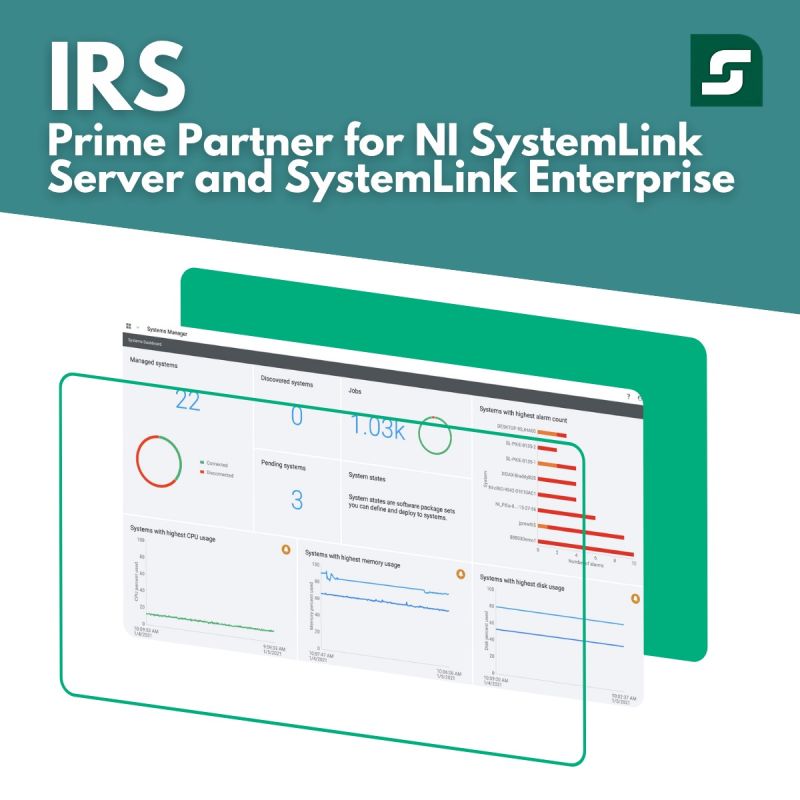
Finally, dashboards are an important tool for transforming data into easily interpretable information. The ability to clearly visualize metrics and results provides an immediate overview of the status of test systems and ongoing activities. This can make it easier to identify anomalies, inefficiencies, or situations that require action.
The integration of these various elements makes it possible to build a truly unified infrastructure for test data management, asset monitoring, and information analysis. The result is an environment in which data is no longer viewed as isolated elements, but becomes part of a broader digital ecosystem.
For Research and Development departments, centralized data management can make it easier to compare different test campaigns and improve the traceability of activities. Engineers can access more structured information and use the results of previous tests to support the development of new products.
In the manufacturing sector as well, having a connected infrastructure can help improve efficiency. Monitoring assets and collecting data from test systems provides greater visibility into the status of the infrastructure and allows for faster identification of any issues.
The integration of test systems with enterprise IT environments also represents an important step toward greater integration between the fields of engineering and enterprise information systems. The data generated during testing can, in fact, become part of broader processes for quality management, performance analysis, and continuous improvement.
This evolution is closely linked to the principlesof Industry 4.0 and Industry 5.0, in which connectivity and data availability are fundamental to building smarter and more resilient processes. A centralized platform provides the technological foundation needed to subsequently leverage advanced analytics and artificial intelligence.
For IRS Srl, the partnership with NI and its role as a SystemLink Prime Partner represent an opportunity to provide companies with specialized expertise in the integration of test systems and digital infrastructure. Its experience in the Test & Measurement sector allows the company to understand not only the IT aspects of implementation but also the operational needs of the engineers and teams who use measurement systems on a daily basis.
IRS’s approach starts with the client’s specific needs and aims to build customized solutions designed to be scalable and sustainable over time. Each implementation can be developed with the organization’s level of digital maturity and future goals in mind, with the option to gradually expand the infrastructure.
In a context where the volume of data generated by test systems is set to grow even further, having an infrastructure capable of managing this information centrally is becoming increasingly important. SystemLink offers companies the ability to create a connected environment in which data, assets, and test systems can be managed more effectively.
As an NI Prime Partner, IRS Srl supports organizations that wish to embark on this journey, from architecture design to platform configuration and integration with existing systems. The goal is to transform fragmented test infrastructures into more connected, accessible, and data-driven ecosystems.
By implementing SystemLink Server and SystemLink Enterprise, companies can build a technological foundation capable of supporting smarter management of test and measurement activities, improving visibility into processes, and creating new opportunities to increase efficiency and quality.
For IRS Srl, this means continuing to leverage engineering expertise and advanced technologies to drive digital transformation, helping companies bridge the gap between testing and IT, and transforming the data generated by testing into a tangible resource for making better decisions and building more efficient industrial processes.
